

Why Does My Drain Keep Clogging?
You clear the sink, the water drains, and everything seems normal. A few days later, you are waiting for the same basin to empty again.
A drain that keeps clogging may have grease, food, hair, or soap buildup left inside the pipe, a blockage farther down the line, or a continuing source of debris. Clearing enough space for water to pass does not always remove the whole obstruction. One slow drain may point to a local problem, while several affected fixtures can suggest a shared drain issue. Recurring clogs, backups, or trouble in multiple drains are reasons to have a plumber assess the cause.
Why the clog keeps coming back
A drain can improve without being completely clear. Removing material near the opening may help water move while leaving buildup farther along the pipe. If that remaining restriction catches more debris, the slowdown can return.
There is also a difference between an old blockage that was never fully removed and a new one forming because the same materials keep entering the drain. The right next step depends on which problem is happening.
Pay attention to the pattern. Does the sink slow down immediately after you clear it, or does the problem return after several weeks? Does it happen during ordinary use, or only when another fixture drains? Those details give a plumber more useful information than simply saying the sink is clogged.
Common causes in kitchen and bathroom drains
In the kitchen, cooking grease and food scraps are common contributors. Grease can enter as a liquid, then cool and collect inside the plumbing. Small amounts added repeatedly can build into a larger restriction.
A garbage disposal does not make those materials disappear. It breaks food into smaller pieces, which still have to travel through the drain. Local askHRgreen guidance recommends keeping fats, oils, grease, and food scraps out of the sink. For appliance-specific care, see our garbage disposal maintenance guide.
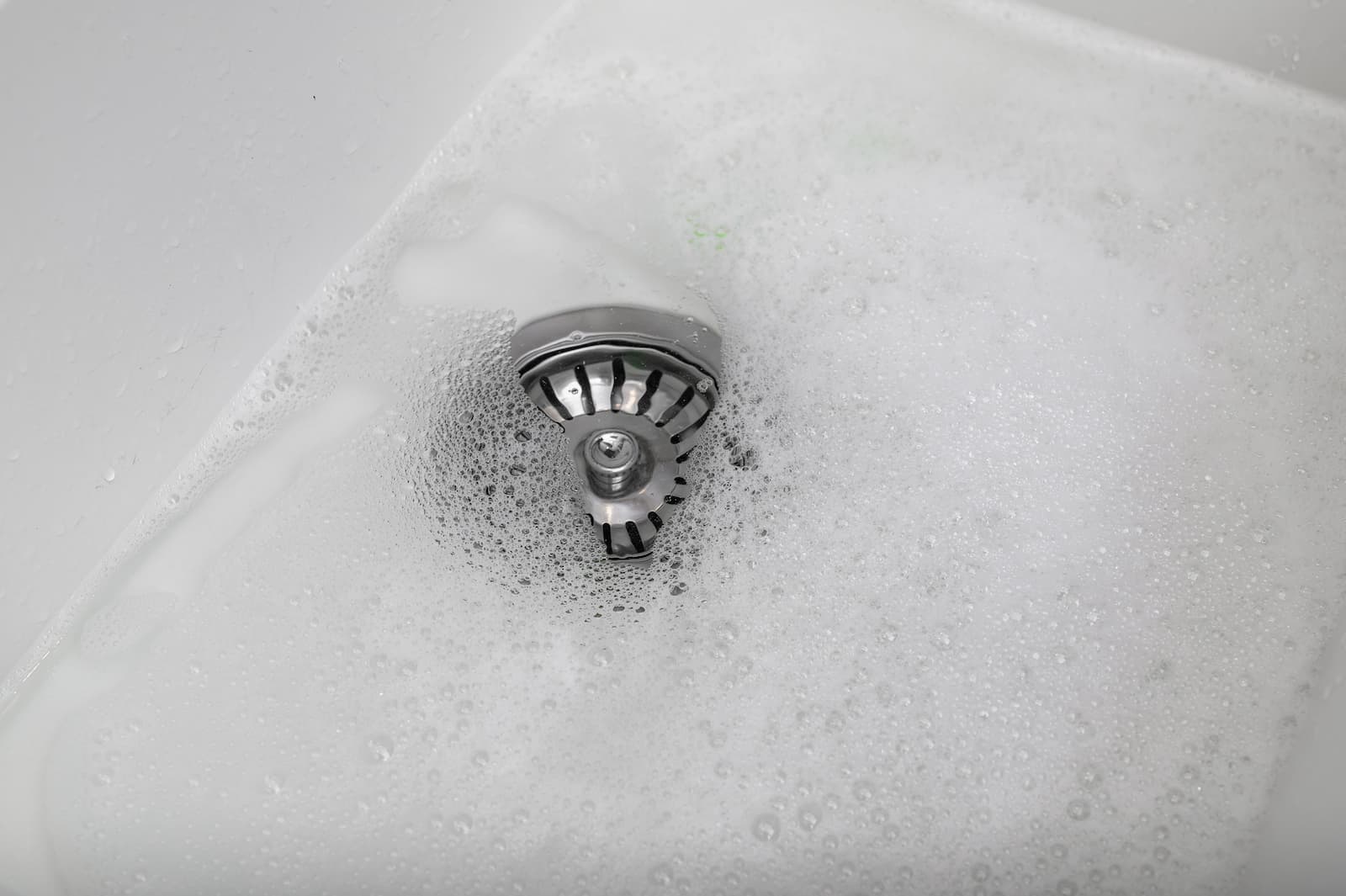
In bathroom sinks, tubs, and showers, hair and soap residue can contribute to blockages. Some material collects around the stopper or drain opening, while other debris travels beyond the area you can see. Removing the visible hair may help, but a drain that still empties slowly needs further attention.
The fixture helps narrow the questions to ask; it does not prove the cause. A kitchen sink can have a problem beyond food buildup, and a slow shower does not automatically mean hair is the only obstruction.
What one slow drain versus several can suggest
If only one fixture drains slowly, the restriction may be near that fixture or in the pipe serving it. If several fixtures are affected, a blockage in a shared drain becomes a possibility. Neither pattern identifies the exact location on its own.
Use these observations to describe the problem when you schedule service. They are clues, not a diagnosis.
| Symptom | Possible explanation | Next step |
| One drain repeatedly slows | Buildup near that fixture or farther along its drain | Note how quickly the problem returns and arrange an assessment. |
| Several fixtures drain slowly | A restriction in a shared drain | Tell the plumber which fixtures are affected. |
| Water backs up into another fixture | A downstream restriction may be interfering with drainage | Stop adding water to affected drains and call for help. |
| Flow improves only briefly | Part of the obstruction may remain | Explain what was tried and how long the improvement lasted. |
If wastewater is backing up, avoid contact with it and keep children and pets away. HRSD explains that untreated sewage can contain harmful organisms. Repeatedly running water to test the drain can add to the mess.
When professional cleaning makes sense
Schedule an assessment when the same drain keeps clogging, clearing it brings only brief improvement, or more than one fixture is involved. You do not need to wait until the drain stops completely to ask for help.
A plumber can evaluate the affected fixtures and choose an approach suited to the obstruction and the plumbing. Professional drain cleaning may address material that is beyond the visible opening, but repeated blockages can also call for further investigation. Cleaning alone will not correct every underlying pipe problem.
Before the appointment, make a short record of which drains are affected, when the problem began, and what has already been tried. Mention any drain-cleaning products used, including the product name. Avoid adding more products or mixing cleaners while waiting for advice.
Ask what appears to be causing the restriction and whether the proposed work addresses that cause. If the problem returns after service, report how soon it happened and whether the same fixtures are involved. That history helps guide the next assessment.
Habits that help prevent another clog
After the immediate problem is addressed, focus on what enters the drain. A few consistent habits can reduce the material that collects in the plumbing.
- Collect cooking grease in a heat-safe container, let it cool, and put it in the trash.
- Scrape food scraps into the trash or compost before washing dishes.
- Use suitable sink strainers and shower hair catchers, and empty them regularly.
- Remove accessible debris from drain covers and stoppers according to the fixture’s instructions.
These habits reduce avoidable buildup, but they cannot clear an existing obstruction farther down the line. If a drain keeps slowing despite changes in how you use it, arrange an assessment rather than repeating the same temporary fix.
For help with a recurring clog in Hampton Roads, contact Smith & Keene to schedule professional drain cleaning. Tell our team which drains are affected and whether you have noticed any backups so we can assess the problem and recommend the next step.